Atradius Atrium
Sie erhalten direkten Zugriff auf Ihre Vertragsinformationen, Tools zur Beantragung von Kreditlimits und Einblicke.

 Österreich
 Australien
 Belgien
 Brazil
 Bulgarien
 China
China
 Dänemark
 Deutschland
 Finnland
 Frankreich
 Griechenland
 Gruppe
 Hongkong
 Indien
 Irland
 Italien
 Japan
Japan
 Kanada
 Litauen
 Mexiko
 Neuseeland
 Niederlande
 Norwegen
Österreich
Norwegen
Österreich
 Polen
Polen
 Portugal
 Rumänien
 Schweden
 Schweiz
 Singapur
 Slowakei
 Slowenien
 Spain
Spain
 Tschechische Republik
 Türkei
 Ungarn
 Vereinigte Arabische Emirate
 Vereinigtes Königreich
 Vereinigte Staaten
According to the latest Atradius Economic Outlook, the risk of a more severe stagflation shock has been contained for now. The ceasefire between the US and Iran has helped ease pressure on energy prices following months of disruption to energy flows through the Strait of Hormuz. Atradius forecasts global GDP growth of 2.4% in 2026, down from 3.0% in 2025, before recovering to 3.1% in 2027. While the conflict has weighed on economic activity through higher energy and commodity costs, the baseline outlook assumes a gradual reopening of the strait, helping the global economy avoid a sharper downturn.
“While the conflict in Iran has pushed up energy costs and created a mild stagflation shock, the feared stagflation spiral is likely to be avoided as long as tensions remain broadly contained. The continued technology and AI investment boom is helping to cushion the impact,” said John Lorié, Chief Economist at Atradius.
While the conflict in Iran has pushed up energy costs and created a mild stagflation shock, the feared stagflation spiral is likely to be avoided as long as tensions remain broadly contained.
The report identifies the AI and technology investment boom as a key source of support for the global economy. Strong spending on data centres, semiconductor manufacturing, cloud infrastructure and related technologies continues to underpin growth, particularly in the US, while AI-related trade remains an important driver of international commerce.
The energy shock is forcing the world’s major central banks to respond in different ways. While the European Central Bank has raised interest rates to contain inflation, the US Federal Reserve is keeping rates higher for longer and delaying monetary easing. In contrast, China continues to maintain a moderately loose monetary stance to support domestic demand. The contrasting responses highlight how unevenly the impact of the Iran conflict is being felt across the world’s largest economies.
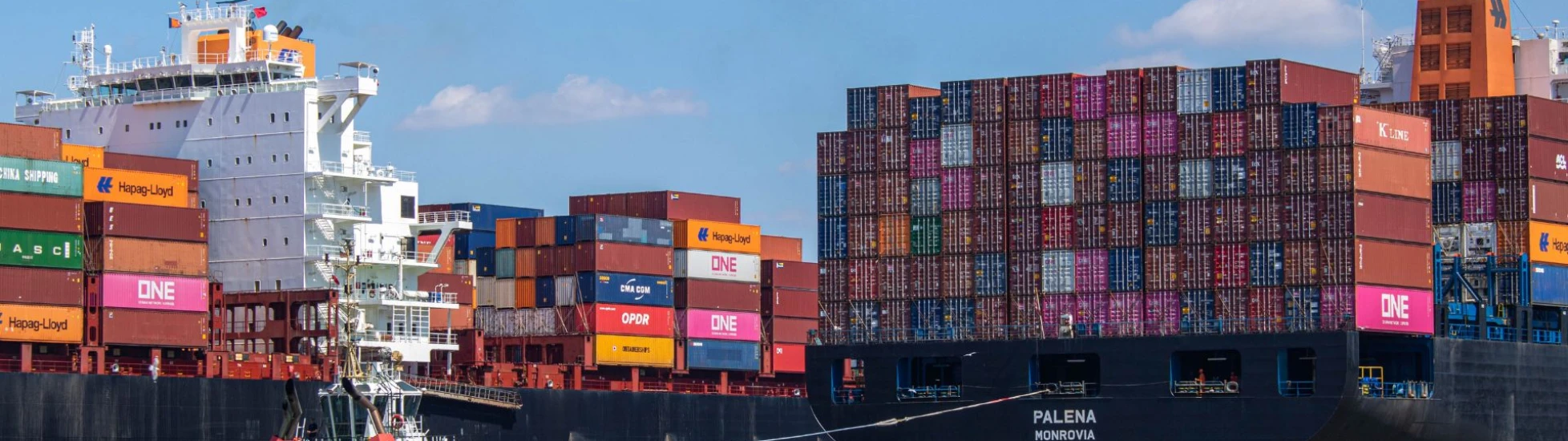
Global trade is expected to lose momentum after a stronger-than-expected 2025. Higher energy costs, weaker import demand and persistent trade policy uncertainty are forecast to keep trade growth below 2% in 2026, before recovering to around 3% in 2027.
Atradius warns that risks remain firmly tilted to the downside. The main threat to the outlook is a re-escalation of the conflict between the US and Iran. In a downside scenario where fighting resumes and the Strait of Hormuz remains largely closed until the fourth quarter, while alternative shipping routes also come under threat, energy prices would surge again. In this scenario, inflation would accelerate and global GDP growth would fall to recessionary levels of 1.9% in 2026 and 1.4% in 2027. Major advanced economies, including the US, would enter recession.
For now, the durability of the ceasefire and the pace at which shipping flows through the Strait of Hormuz return to normal remain the key factors shaping the global economic outlook.
To explore how to strengthen your own credit risk strategy, get in touch with us and see how we can help you stay ahead.


